

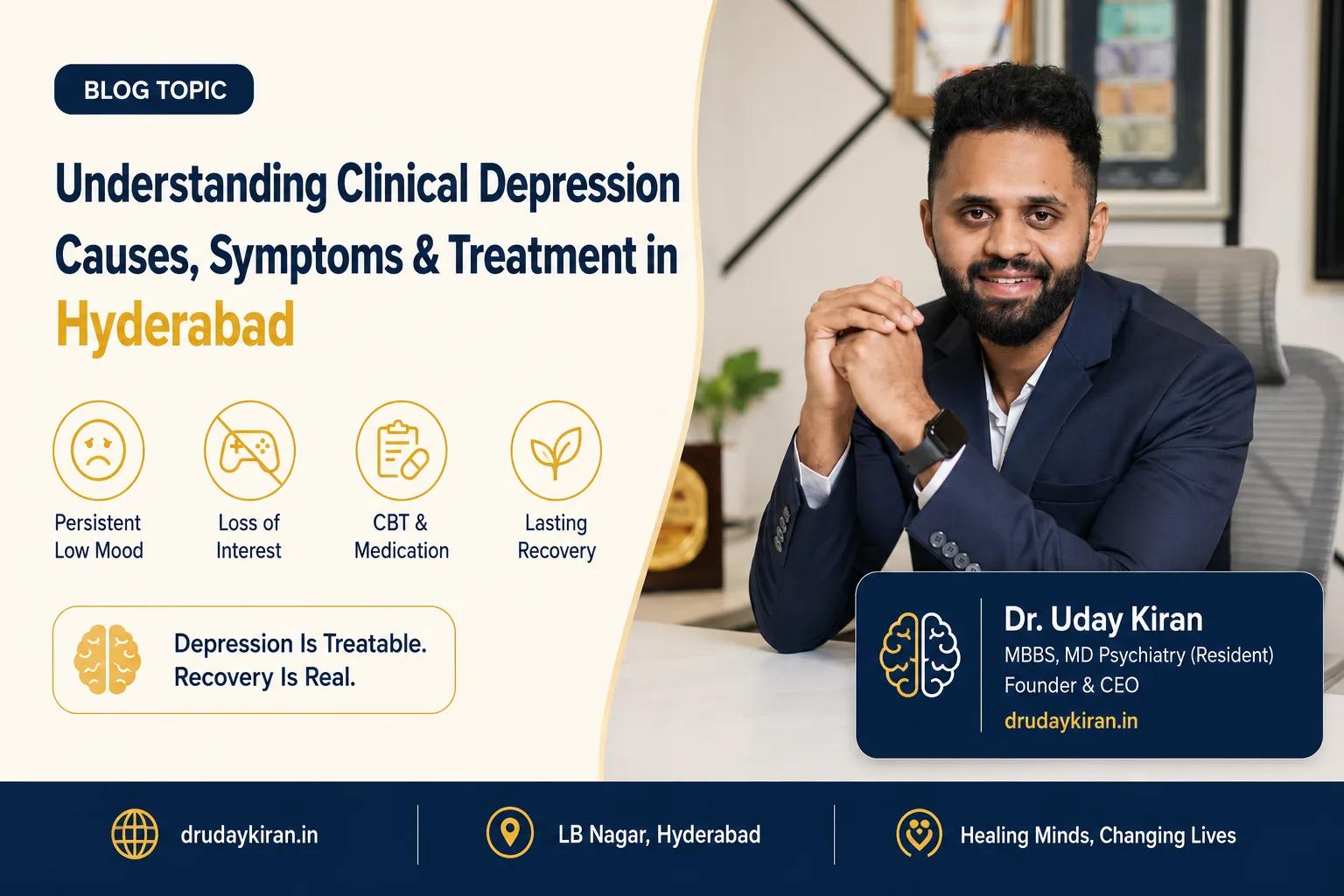
Depression is one of the most misunderstood mental health conditions in the world. Far too often, it is dismissed as “just sadness” or a phase that will pass on its own. But clinical depression is a serious, complex medical condition that affects how a person thinks, feels, and functions in daily life. Left untreated, it can have devastating consequences on relationships, careers, physical health, and overall quality of life.
In Hyderabad, Dr. Uday Kiran — Founder & CEO of Bharosa Neuro Psychiatry Hospital and a dedicated mental health specialist — has helped many patients navigate their way out of depression with compassionate, evidence-based care. If you or someone you love is struggling, understanding what depression treatment in Hyderabad involves is the first step toward healing.

What Is Clinical Depression?
Clinical depression, medically known as Major Depressive Disorder (MDD), is far more than temporary sadness. It is a persistent mood disorder that affects the brain's chemistry, structure, and functioning. A person with clinical depression experiences a pervasive sense of hopelessness, loss of interest in activities they once loved, and a range of physical and emotional symptoms that interfere significantly with everyday responsibilities.
According to the World Health Organization, depression affects over 280 million people globally and is a leading cause of disability worldwide. In India, millions go undiagnosed and untreated due to stigma and lack of awareness — making accessible depression treatment in Hyderabad an urgent need.
Common Causes of Clinical Depression
Depression does not have a single cause; it is typically the result of a combination of biological, psychological, and social factors.
Biological Factors
Imbalances in brain neurotransmitters — particularly serotonin, dopamine, and norepinephrine — play a significant role. Genetics also contribute; a family history of depression increases vulnerability. Hormonal imbalances, thyroid disorders, and chronic illnesses such as diabetes or heart disease can also trigger depressive episodes.
Psychological Factors
Low self-esteem, perfectionism, a history of trauma or abuse, and negative thinking patterns are major psychological contributors. People who have experienced childhood neglect or loss are particularly vulnerable to developing clinical depression later in life.
Social and Environmental Factors
Prolonged stress at work or home, financial difficulties, relationship breakdowns, bereavement, isolation, and major life transitions can all act as triggers. In cities like Hyderabad, competitive professional environments and changing social structures have contributed to rising cases.
Recognising the Symptoms of Clinical Depression
Early recognition can make a significant difference in the course of treatment and recovery. The most common symptoms include:
- Persistent sadness or emptiness lasting more than two weeks
- Loss of interest or pleasure in activities once enjoyed (anhedonia)
- Fatigue and low energy even without physical exertion
- Difficulty concentrating, making decisions, or remembering things
- Sleep disturbances — either insomnia or excessive sleeping
- Changes in appetite or weight — significant gain or loss
- Feelings of worthlessness, guilt, or hopelessness
- Physical symptoms such as unexplained aches, headaches, or digestive issues
- Thoughts of death or suicide in severe cases — if you are having such thoughts, please seek help immediately; call the national mental health helpline Tele-MANAS at 14416.
If five or more of these symptoms are present for most of the day, nearly every day, for at least two weeks, a clinical diagnosis of depression is likely. Seeking professional help at the earliest sign is strongly encouraged.
Clinical depression is not a weakness, and it is not a choice. It is a medical condition that deserves professional attention, compassionate care, and evidence-based treatment.
Effective Treatment Options for Clinical Depression
The good news is that depression is highly treatable. With the right combination of therapies, most individuals experience significant improvement. Dr. Uday Kiran offers a full spectrum of depression treatment in Hyderabad tailored to each patient's unique needs.
Antidepressant Medications
Pharmacotherapy remains one of the most effective treatments for moderate to severe depression. SSRIs, SNRIs, and other classes of antidepressants help correct neurochemical imbalances. Dr. Uday Kiran carefully evaluates each patient before prescribing, monitoring dosage and side effects with close follow-up.
Psychotherapy
Cognitive Behavioural Therapy (CBT) is the gold-standard psychotherapy for depression. It helps patients identify and challenge distorted thinking, replace negative thoughts with healthier ones, and develop practical coping strategies. Interpersonal Therapy (IPT), Behavioural Activation, and Mindfulness-Based Cognitive Therapy (MBCT) are also effective.
Lifestyle Interventions
Regular physical activity, a balanced diet, structured sleep schedules, and reduced alcohol intake are powerful adjuncts to formal treatment, incorporated into every treatment plan.
Family and Social Support
Depression ripples through families and relationships. Psychoeducation for family members, couples therapy, and group therapy are important components of a holistic recovery plan.
Advanced Treatments for Resistant Depression
For patients who do not respond to conventional therapies, Dr. Uday Kiran evaluates the need for advanced approaches such as neuromodulation therapies, offering renewed hope for those who have not found relief through standard methods.
Why Choose Dr. Uday Kiran for Depression Treatment in Hyderabad?
Dr. Uday Kiran, Founder & CEO of Bharosa Neuro Psychiatry Hospital, combines clinical precision with deep empathy — ensuring patients not only receive the most appropriate medical care but also feel truly heard and supported throughout their recovery, in a safe space where stigma is dismantled and healing is prioritised.
Whether you are experiencing your first episode of depression or have been struggling for years, it is never too late to seek help. Book a confidential consultation and take the first step toward lasting recovery.
Helpful Resources
- World Health Organization — Depression
- National Institute of Mental Health — Depression
- Indian Psychiatric Society
Contact & Location
Bharosa Neuro Psychiatry Hospital
Plot No. 114, Mythripuram, Karmanghat, Opposite TKR College, LB Nagar, Hyderabad – 500079

Medically Reviewed & Approved
This article was clinically reviewed and approved by Dr. Uday Kiran.
MBBS · MD Psychiatry · Founder & CEO, Bharosa Neuro Psychiatry Hospital, HyderabadLast reviewed June 5, 2026