

A little anxiety is normal. Before an important presentation, an exam, or a big life decision, feeling nervous is your body's natural stress response. But when anxiety becomes a constant companion — when it follows you everywhere, disrupts your sleep, strains your relationships, and stops you from living fully — it is no longer “just nerves.” It may be an anxiety disorder.
Anxiety disorders are among the most prevalent mental health conditions in the world, yet they remain widely misunderstood and undertreated. Many people in Hyderabad live with debilitating anxiety for years, assuming it is simply part of their personality or something they must endure. The truth is: anxiety disorders are highly treatable, and expert anxiety disorder treatment in Hyderabad is available right now.

What Are Anxiety Disorders?
Anxiety disorders are a group of mental health conditions characterised by excessive, persistent fear or worry that is difficult to control and interferes with daily life. Unlike situational stress, anxiety disorders do not resolve once a stressor is removed. They are chronic conditions that often worsen without proper treatment. Common types include:
- Generalized Anxiety Disorder (GAD) — constant, uncontrollable worry about multiple areas of life
- Panic Disorder — recurrent, unexpected panic attacks with intense physical symptoms
- Social Anxiety Disorder — extreme fear of social situations and being judged by others
- Specific Phobias — intense fear of specific objects or situations
- Health Anxiety — persistent worry about having a serious illness
Warning Signs You Should Not Ignore
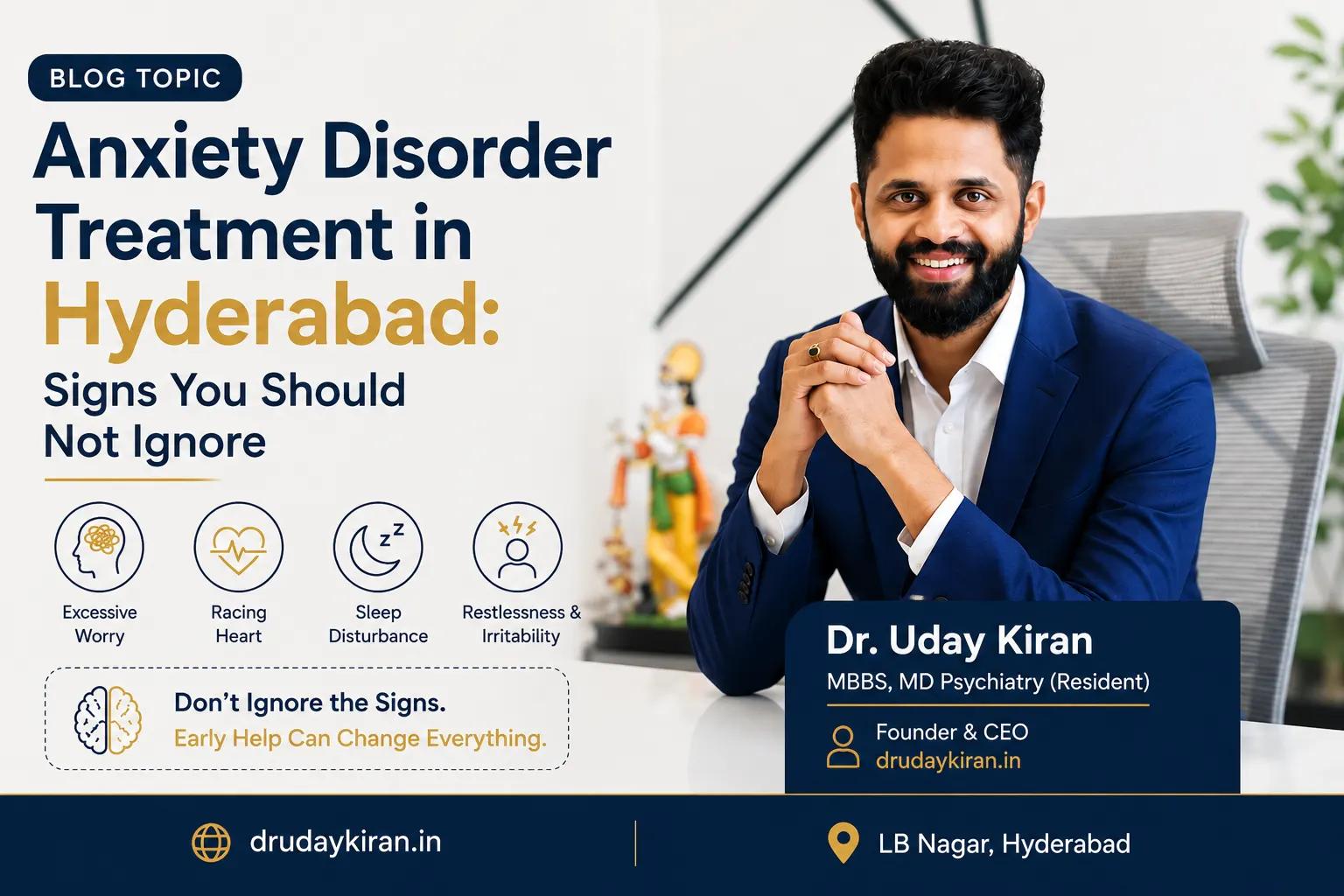
One of the most dangerous aspects of anxiety disorders is how easy they are to rationalise. Many people explain away their symptoms as personality traits or lifestyle factors. Here are the signs that indicate it is time to seek professional anxiety disorder treatment in Hyderabad:
Persistent, Excessive Worry. If you find yourself worrying about everyday matters — finances, health, family, work — to a degree that feels uncontrollable and disproportionate, this is a hallmark sign of GAD. The worry is not occasional; it is relentless.
Physical Symptoms Without Medical Cause. Anxiety is not only psychological — it manifests physically. Unexplained symptoms such as a racing heart, chest tightness, shortness of breath, trembling, sweating, dizziness, or chronic headaches may be anxiety-driven. Many patients undergo multiple medical tests before realising their symptoms are psychiatric in origin.
Panic Attacks. A panic attack is a sudden surge of intense fear with physical symptoms so severe that many people believe they are having a heart attack. If you have experienced episodes of sudden terror, heart palpitations, difficulty breathing, or a sense of impending doom, please seek help immediately.
Avoidance Behaviour. When anxiety causes you to avoid certain places, people, events, or responsibilities, it is controlling your life. Avoidance may offer short-term relief but reinforces the anxiety cycle long-term.
Sleep Disturbances. Racing thoughts at night, difficulty falling asleep, or waking up in a state of dread are common anxiety symptoms that severely impact daily functioning and overall health.
Irritability and Difficulty Concentrating. When the mind is constantly on high alert, focus and patience become casualties. Unexplained irritability or an inability to concentrate — particularly in the absence of other causes — can point to an underlying anxiety disorder.
Anxiety disorders do not disappear on their own — and the longer they go untreated, the more entrenched they become. The good news: they are highly treatable.
Treatment Options for Anxiety Disorders
Effective treatment for anxiety disorders is multi-dimensional. The goal is not merely to reduce symptoms temporarily but to address root causes and build long-term resilience.
- Cognitive Behavioural Therapy (CBT) — the gold standard for treating most anxiety disorders. CBT helps patients identify anxious thought patterns, challenge irrational beliefs, and replace them with healthier responses. Exposure therapy — a component of CBT — is particularly effective for phobias and panic disorder.
- Medication — Depending on the severity and type, a psychiatrist may recommend anti-anxiety medications or antidepressants (SSRIs/SNRIs), which are proven to reduce anxiety symptoms over time. These are carefully prescribed and monitored for safety and effectiveness.
- Mindfulness and Relaxation Techniques — Mindfulness-based therapies, breathing exercises, and progressive muscle relaxation help patients manage anxiety responses in real time.
- Lifestyle Modifications — Regular physical activity, reduced caffeine intake, structured sleep routines, and strong social connections all contribute meaningfully to anxiety management.
Do Not Wait — Help Is Here
Many patients spend years suffering from anxiety before seeking help. Some fear being labelled; others hope it will resolve itself. But anxiety disorders do not disappear on their own — and the longer they go untreated, the more entrenched they become.
With Dr. Uday Kiran, you will receive compassionate, expert-led anxiety disorder treatment in Hyderabad tailored specifically to your needs. With a combination of evidence-based therapy, appropriate medication, and ongoing support, recovery is not just possible — it is the expectation. Take the signs seriously: reach out today and reclaim the calm, focused, fulfilling life you deserve.
Helpful Resources

Medically Reviewed & Approved
This article was clinically reviewed and approved by Dr. Uday Kiran.
MBBS · MD Psychiatry · Founder & CEO, Bharosa Neuro Psychiatry Hospital, HyderabadLast reviewed June 1, 2026