

Introduction
Nobody wakes up one day and decides to become addicted to something. It's slower than that. A drink to unwind turns into something you can't skip. A pill for sleep turns into something your body won't function without. By the time most people admit there's a problem, it's already been one for a while. If any part of this feels close to home, this is for you.
Do You Need to See a De-Addiction Psychiatrist in Hyderabad?
I'll say this plainly: almost everyone waits too long. Not because they don't know something's wrong, but because admitting it out loud to a doctor feels like a bigger step than the drinking or using itself. There's a strange logic to it — as long as no one else knows, it's still manageable. That logic rarely holds up for long.
A de-addiction psychiatrist in Hyderabad isn't there to judge how things got this far. Their job is to treat addiction the way medicine actually understands it now — as a condition with real biological roots, not a character flaw someone can just decide to fix.
What Actually Happens in Treatment
The rehab most people picture — locked doors, isolation, strangers deciding your schedule — isn't really how this works anymore, at least not at a hospital that takes psychiatric care seriously.
It usually starts with just talking. A psychiatrist wants to know what's underneath the addiction before jumping to fix the addiction itself. Sometimes that's stress that built up over years. Sometimes it's an old trauma nobody in the family ever addressed. Sometimes there's undiagnosed anxiety or depression sitting quietly underneath everything, and the drinking or the pills were just a way of managing it without knowing that's what was happening.
Then there's detox, if it's needed. This part isn't optional to do carelessly — stopping alcohol or certain substances abruptly can be genuinely dangerous without a doctor supervising it. This is where a lot of people get it wrong on their own, trying to quit cold turkey out of sheer willpower and ending up worse off, not better.
And then comes the longer part, the part that actually determines whether recovery sticks. Therapy. Sometimes medication for cravings or for whatever's underneath the addiction. Family involved, because addiction rarely stays contained to one person even when someone tries hard to hide it.
Why Timing Changes Everything
Here's something that doesn't get explained enough: addiction physically changes how the brain handles reward over time. It's not weakness, and it's not really a decision anymore once it's gone on long enough — the brain's wiring shifts. That's exactly why "just stop" sounds so simple and works so rarely.
The earlier someone gets help, the more the odds shift in their favor. Less damage to the liver and heart. A brain that's still flexible enough to respond well to treatment. Relationships and jobs that haven't already taken the hit they eventually would. None of this is promised, obviously, but it's the pattern doctors see again and again.
What This Can Look Like Before It's Obvious
Addiction doesn't always announce itself. Sometimes the signs are things people brush off for months. Needing more of something just to feel normal. Getting unusually irritable or anxious without it. Hiding how much is actually being used, even from people who'd notice if they were paying closer attention. Letting work or responsibilities slide a little at a time. Trying to cut back and quietly failing at it more than once.
If even part of this sounds like someone you know — or like you — that's usually enough reason to have one real conversation with a professional about it.
How Bharosa Hospitals Approaches This
At Bharosa Neuro Psychiatry Hospital, addiction isn't treated as a standalone problem that ends once someone's sober. Dr. Uday Kiran, who founded the hospital and has spent over a decade in psychiatry, built the whole approach around this idea that the person matters more than the substance.
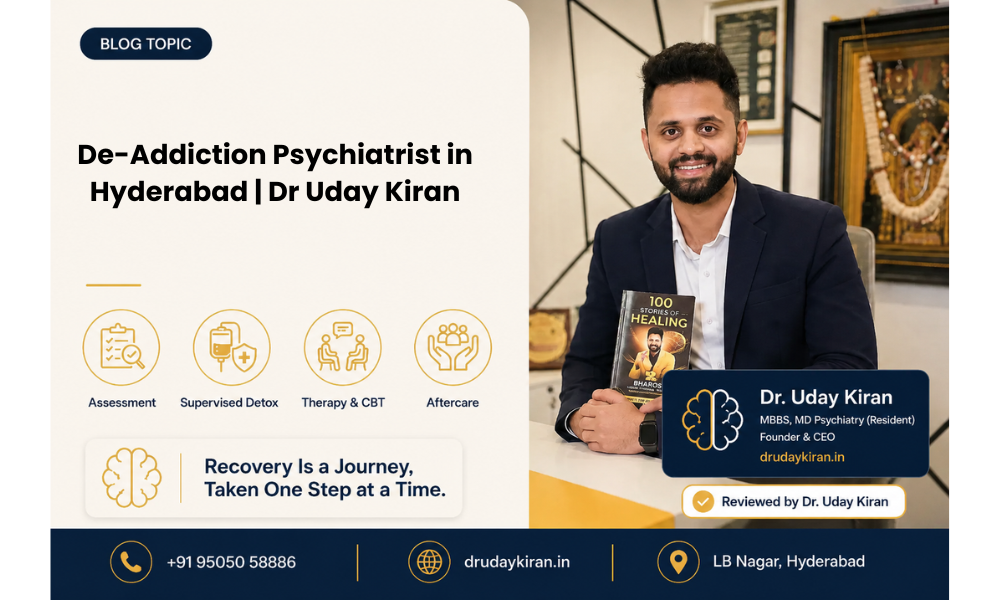
A typical plan starts with genuinely understanding someone's history — not just the addiction, but what led there. Detox, when it's needed, happens under real medical supervision. Counseling addresses what's actually underneath things instead of just the behavior on the surface. Families get brought into the process too, because recovery tends to go better when the people closest to someone understand what's happening instead of guessing at it from the outside. And there's a long-term plan for afterward, because the risk of relapse doesn't just vanish once detox is over — if anything, that's often when it's highest.
A lot of people going through addiction are also dealing with depression or anxiety that never got properly treated. Miss that part, and treating the addiction alone often isn't enough — relapse becomes much more likely. This is really the core reason a psychiatrist's involvement matters here, not just a counselor or a support group, as valuable as those can also be.
The Real Reason People Don't Ask for Help
If you're honest with yourself, it's probably not the treatment that scares you. It's what people might think if they found out you needed it.
That shame is real, and it keeps people quiet for years longer than makes sense. But addiction is a medical condition, no different in principle from diabetes or high blood pressure. It responds to proper treatment. Seeing a psychiatrist for it isn't a sign that someone's failed — it's one of the harder, more responsible choices a person can make for themselves.
Everything discussed stays private, too. That's not a minor detail tacked onto the process. It's the whole foundation of how ethical psychiatric care is supposed to work in the first place.
Where to Start
If you've read this far, there's a good chance someone specific has been in the back of your mind the whole time. Maybe it's you. Maybe it's someone you care about and don't know how to bring this up with.
Either way, it doesn't have to start with some big decision. It can just be a conversation. A consultation with a de-addiction psychiatrist in Hyderabad is usually enough to understand where things actually stand, without pressure and without judgment attached to it.
Final Thoughts
Addiction has a way of making people feel like they're the only one going through it. They almost never are, and recovery doesn't have to be something faced alone. With the right support, real change is possible — and it usually begins with one honest conversation someone put off for far too long.
If you or someone close to you is struggling, Bharosa Neuro Psychiatry Hospital in Hyderabad offers compassionate, medically supervised de-addiction treatment led by Dr. Uday Kiran. Reach out however feels most comfortable — a phone call, a consultation, even a WhatsApp message. How you start matters far less than the fact that you actually do.

Medically Reviewed & Approved
This article was clinically reviewed and approved by Dr. Uday Kiran.
MBBS · MD Psychiatry · Founder & CEO, Bharosa Neuro Psychiatry Hospital, HyderabadLast reviewed August 27, 2026