

Every parent has seen their child repeat a habit a few times — checking if the door is locked, lining up toys "just right," or asking the same question twice. Most of this is completely normal childhood behavior. But when these patterns become rigid, time-consuming, distressing, and start interfering with school, friendships, or daily routines, they could be early signs of Obsessive-Compulsive Disorder (OCD).
Childhood OCD is more common than most families realize, yet it is frequently mistaken for "just a phase" or a personality quirk. Recognizing the signs early — and knowing where to find reliable OCD Treatment in Hyderabad — can make a tremendous difference in a child's emotional development, academic performance, and long-term mental health.
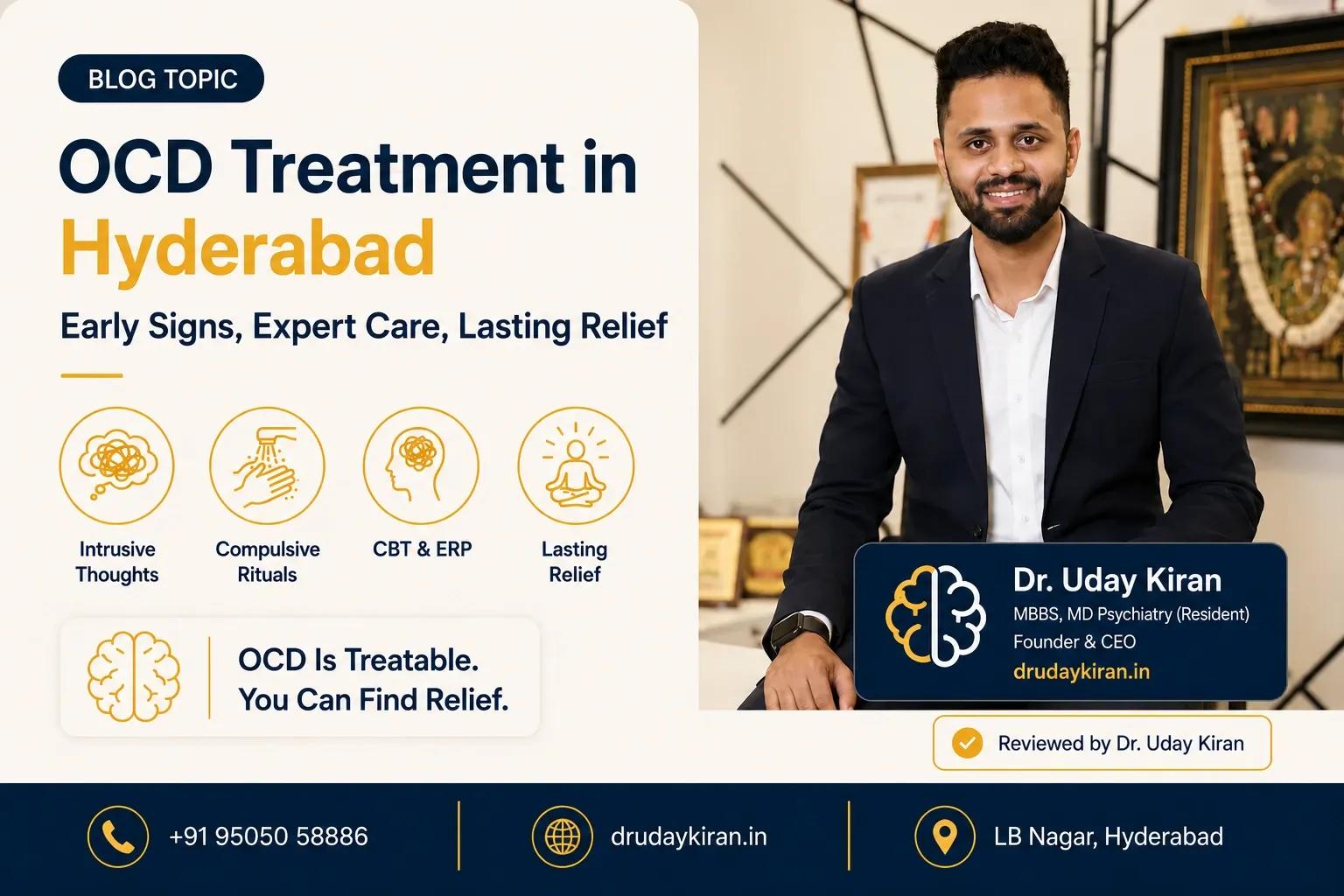
In this blog, Dr. Uday Kiran, CEO of Bharosa Hospitals, shares insights on identifying childhood OCD and the treatment pathways available for children and adolescents in Hyderabad.
What Is Childhood OCD?
OCD is a neuropsychiatric condition characterized by two core components:
- Obsessions – Intrusive, unwanted thoughts, images, or urges that cause significant anxiety or discomfort.
- Compulsions – Repetitive behaviors or mental rituals performed to reduce the anxiety triggered by the obsession.
In children, these obsessions and compulsions often revolve around themes like contamination, harm coming to a loved one, symmetry, or a need for "things to feel right." Unlike adults, children may not always recognize that their thoughts are irrational — they simply know the anxiety is overwhelming and the ritual brings temporary relief.
Signs Parents Should Watch For
Because children often hide their rituals out of embarrassment, parents need to look closely at behavioral patterns rather than waiting for a child to "explain" what's wrong. Common warning signs include:
- Excessive handwashing or cleaning due to fear of germs, dirt, or contamination
- Repeated checking behaviors — locks, switches, schoolbags, or homework, even after confirming everything is fine
- Counting, tapping, or repeating actions a specific number of times before feeling "okay"
- Arranging objects symmetrically or becoming distressed when items are out of order
- Seeking constant reassurance from parents ("Are you sure nothing bad will happen?")
- Avoidance behaviors — refusing to touch certain objects, avoid certain rooms, or steer clear of specific numbers or colors
- Unusually slow routines, such as taking an hour to get ready for school due to rituals
- Sudden drops in academic performance because intrusive thoughts are consuming attention
- Irritability or meltdowns when rituals are interrupted or when a parent tries to stop a compulsive behavior
If these behaviors persist for weeks, consume more than an hour a day, or cause visible distress, it's time to consult a mental health professional rather than wait it out.
Why Early Intervention Matters
Untreated childhood OCD rarely "goes away on its own." Left unaddressed, it tends to:
- Worsen in severity and broaden into multiple themes
- Affect self-esteem, friendships, and family relationships
- Lead to school avoidance or academic decline
- Increase the risk of co-occurring anxiety or depressive disorders into adolescence and adulthood
This is why timely, professional OCD Treatment in Hyderabad is so important — early therapeutic intervention has consistently been associated with better long-term outcomes for children compared to delayed treatment.
What Causes OCD in Children?
OCD doesn't stem from poor parenting or a child being "dramatic." It is a brain-based condition influenced by:
- Genetics — a family history of OCD or anxiety disorders increases risk
- Neurobiological factors — differences in brain circuits regulating fear and habit formation
- Environmental stressors — major life changes, trauma, or in some cases, post-infectious triggers (such as PANDAS/PANS, where OCD symptoms appear abruptly after a streptococcal infection)
- Temperament — children who are naturally anxious or perfectionistic may be more vulnerable
Understanding the root cause helps psychiatrists tailor an effective treatment plan rather than applying a one-size-fits-all approach.
OCD Treatment in Hyderabad: What Are the Options?
Effective OCD Treatment in Hyderabad for children typically combines therapy, medical management, and family involvement. At Bharosa Hospitals, treatment plans are built around the following pillars:
1. Cognitive Behavioral Therapy (CBT) with Exposure and Response Prevention (ERP)
ERP is considered the gold-standard psychological treatment for OCD across all age groups, including children. It involves gradually and safely exposing the child to anxiety-triggering situations while helping them resist the urge to perform compulsions — teaching the brain that the feared outcome doesn't occur and the anxiety naturally subsides over time.
2. Medication Management
For moderate to severe cases, a psychiatrist may recommend medication, most commonly from the SSRI (Selective Serotonin Reuptake Inhibitor) class, which has well-established use in pediatric OCD. Medication decisions are always individualized, closely monitored, and reviewed regularly by the treating psychiatrist.
3. Family-Based Therapy
Parents often unintentionally accommodate a child's compulsions (for example, providing repeated reassurance) to reduce short-term distress. Family therapy teaches parents how to respond supportively without reinforcing the OCD cycle, which significantly improves treatment outcomes.
4. School Coordination
In more severe cases, coordinating with teachers and school counselors ensures the child receives appropriate academic accommodations while therapy progresses.
5. Ongoing Monitoring
OCD symptoms can fluctuate with stress, illness, or developmental changes. Regular follow-up appointments allow the treatment plan to be adjusted as the child grows.
Why Choose Bharosa Hospitals for Childhood OCD Treatment?
Finding the right OCD Treatment in Hyderabad means choosing a team experienced specifically in child and adolescent mental health — not just general psychiatry. At Bharosa Neuro Psychiatry Hospitals, Dr. Uday Kiran and his clinical team offer:
- Comprehensive evaluation to distinguish OCD from other childhood conditions (such as generalized anxiety or autism-related rigidity)
- Evidence-based ERP and CBT delivered by trained mental health professionals
- Judicious, closely monitored medication management when required
- Family counseling sessions to support parents through the treatment journey
- A compassionate, non-judgmental environment designed to make children feel safe discussing their fears
A Note for Parents
If you notice your child engaging in repetitive rituals, seeking constant reassurance, or showing unusual distress around specific routines, trust your instincts. Childhood OCD is treatable, and the earlier it is addressed, the smoother your child's path to recovery will be. You are not alone in this, and seeking help is a sign of strong, attentive parenting — not failure.
Book a Consultation
If you're searching for reliable, child-focused OCD Treatment in Hyderabad, the team at Bharosa Neuro Psychiatry Hospitals is here to help your family every step of the way.
Bharosa Neuro Psychiatry Hospitals
Plot No. 114, Mythripuram, Karmanghat, Opposite TKR College, LB Nagar, Hyderabad – 500079
+91 9505058886

Medically Reviewed & Approved
This article was clinically reviewed and approved by Dr. Uday Kiran.
MBBS · MD Psychiatry · Founder & CEO, Bharosa Neuro Psychiatry Hospital, HyderabadLast reviewed June 27, 2026